Art reveals the realities of marijuana
A creative exhibition expresses good public-health sense
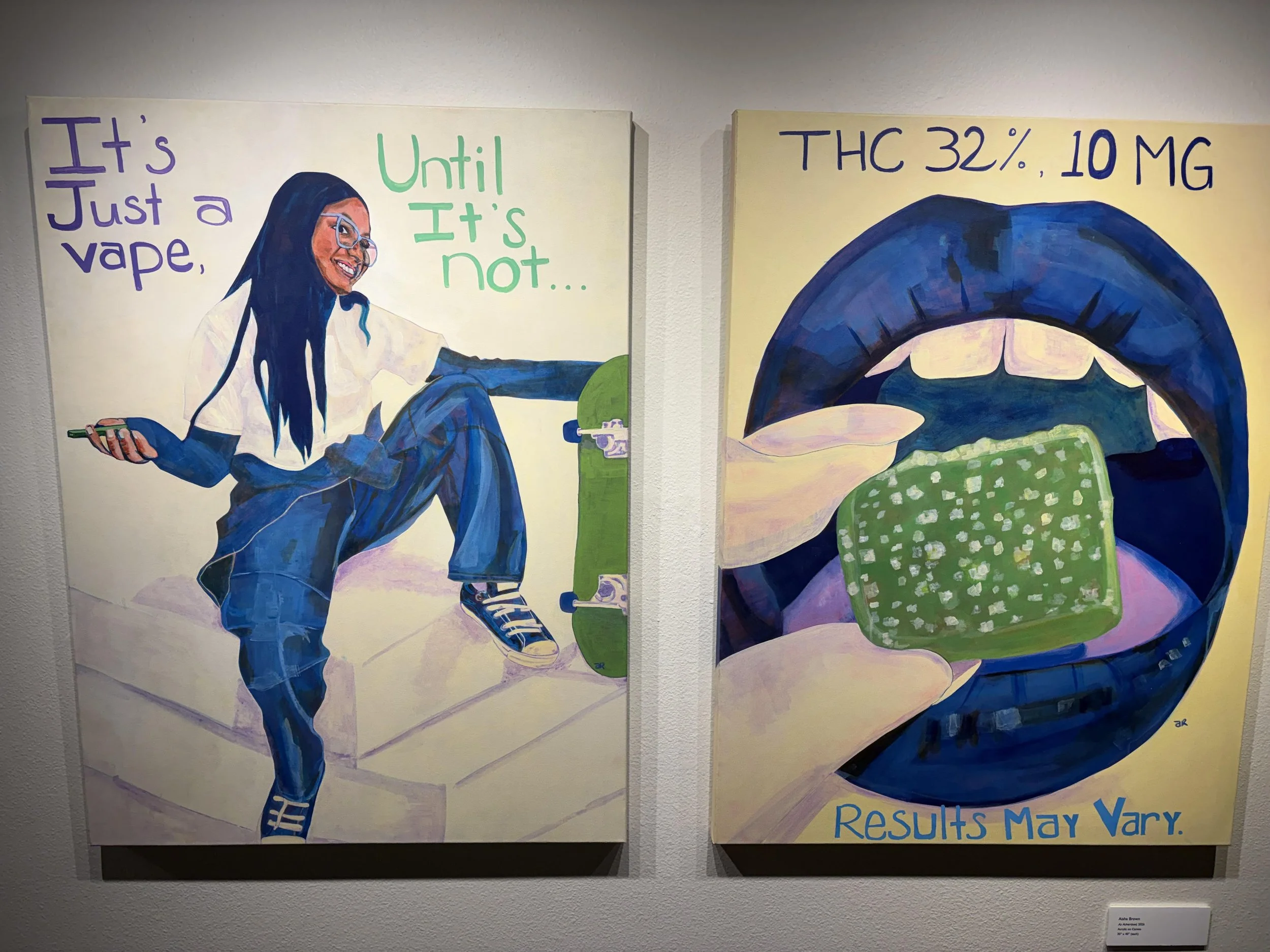
Aisha Brown’s artwork “As Advertised” (2026), part of an exhibit entitled “Hear/Say” and developed by the Colorado School of Public Health’s Colorado Cannabis Education, Research and Policy Project. (Cannabis is the scientific name for marijuana plants.)
Visual art is a first-rate way to get people’s attention on almost any topic. Even marijuana.
In November 2012, Colorado, now my home state, became the first US state to legalize marijuana use for recreational, non-medical purposes. Since then, we have suffered predictable consequences, including negative mental health effects, marijuana-impaired drivers causing accidents on our highways, and a repulsive smell entering our residence when someone was smoking in the unit below ours.
(We also had a positive impact when a Christian family chemically refined marijuana to eliminate the psychoactive component, THC, and ended up with a compound that provided relief when administered to young children with epileptic seizures.)
The more permissive sectors of contemporary Western societies have embraced drugs and other expressions of lifestyle freedom, often despite obvious health and social risks. The arts community can, from time to time, favor exploration and permissiveness. Happily, public health practitioners take a more precautionary approach.
On June 5, Nancy and I dropped in at our city’s arts center and unexpectedly encountered opening night of an art exhibit on the health effects related to marijuana — and not one that uncritically celebrated the joy of getting “high.” Rather, it was an exhibit called Hear/Say, which seeks to artistically portray “how today’s highly concentrated cannabis affects health.”
The exhibit was developed by the Colorado School of Public Health’s Colorado Cannabis Education, Research and Policy Project (CO CERP). Staff members present for the opening night explained that the exhibit was designed to bring together artistic expression, personal experience, and public health messaging, so as to encourage people to think and engage more deeply about the topic of cannabis.
The artists represented marijuana’s impact in various creative ways, including leaf patterns imposed on fabric to simulate the glazed feeling of being stoned; blurred brain scan images; micrographs of neurons; visual representations of hallucination experiences; and roaches walking around on the brain.
Aisha Brown’s work “As Advertised” (2026; see photo above) was accompanied by a thoughtful statement by the artist. Brown explained:
“This work examines how trust is built through the language and design of public health messaging. Information about THC potency, dosage, and safety is often presented with a sense of clarity and precision, even when the data itself is inconsistent or still evolving.”
Using portraiture and a visual language borrowed from advertising, the work mimics the calm, polished tone of official campaigns. Soft color palettes and familiar formats invite a sense of ease and credibility, while subtle contradictions in text and detail begin to disrupt that trust.
The figures exist within this tension. They are presented with care and familiarity, reflecting how these messages are received in everyday life. There is no immediate alarm, only a quiet friction between what is shown and what is implied.
Within Hear/Say, this work questions how authority communicates risk, and how easily belief can be shaped by presentation. It asks the viewer to consider not just the information itself, but how that information is framed and who benefits from the story being told.
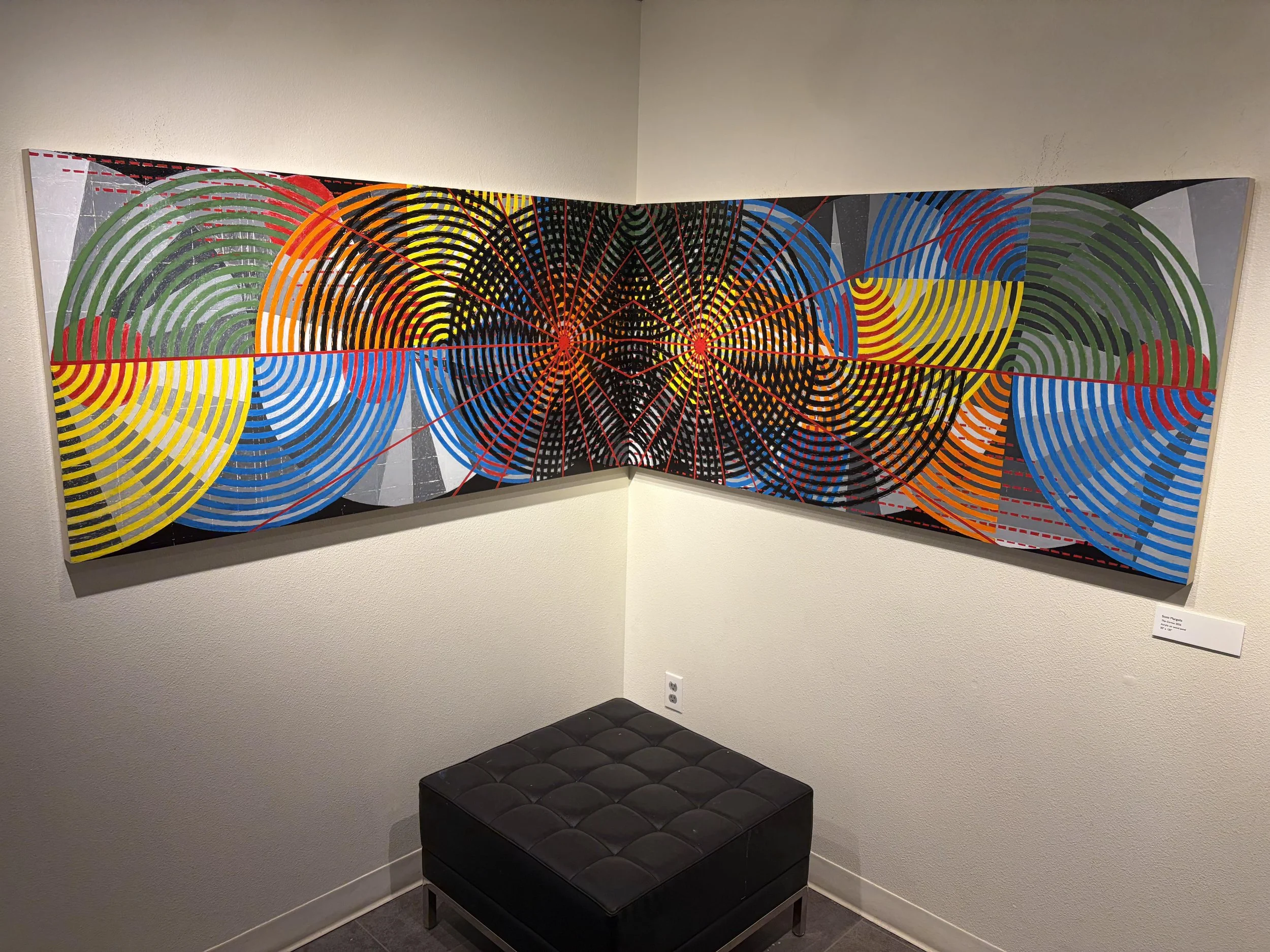
Scott Margolis, “The Corner” (2026). The 30’ x 120’ work is mounted in the corner of a room to attract viewers toward the dark interior section.
Scott Margolis wrote in his statement about “The Corner” that when marijuana was not legal, it “carried an anti-establishment, rebellious, and slightly dangerous quality that teenagers have always been drawn to. Addiction touches many families, including mine. With today’s technological distractions and easy-to-access legal cannabis, kids growing up now face challenges very different from those of previous generations. The story behind this painting reflects how something simple can become more and more complex, drawing you in and holding your attention the same way profit-driven, highly potent, culturally accepted, legal pot can entice and entrap vulnerable populations. Aimed at teens and young adults, this work informs and warns of the risks and potential long-term damage commercial cannabis can cause.”
Margolis’s work ingeniously represents the attractiveness and impacts of marijuana. The red lines radiate out, but the placement of the 90-degree angle in the middle of the work entices viewers into the corner. The colorful concentric rings resemble a polar grid, but their predictability is overtaken by an asymmetry full of false starts and dead ends. A noisy, dark effect at the center blocks the playful circles. The multiple layers of paint demonstrate how obscured and lost the past can become.
“The closer you get to the corner,” Margolis wrote, “the less you can see. The compulsive use of circles forms a density of texture that fills your peripheral vision, restricts the flow of the composition, and forms a dizzying, buzzy cage of black paint.”
Margolis concluded, “‘The Corner’ asks you to step in to experience a brief sense of isolation. But it also invites us to consider how we engage with the cannabis industry and its regulators.”
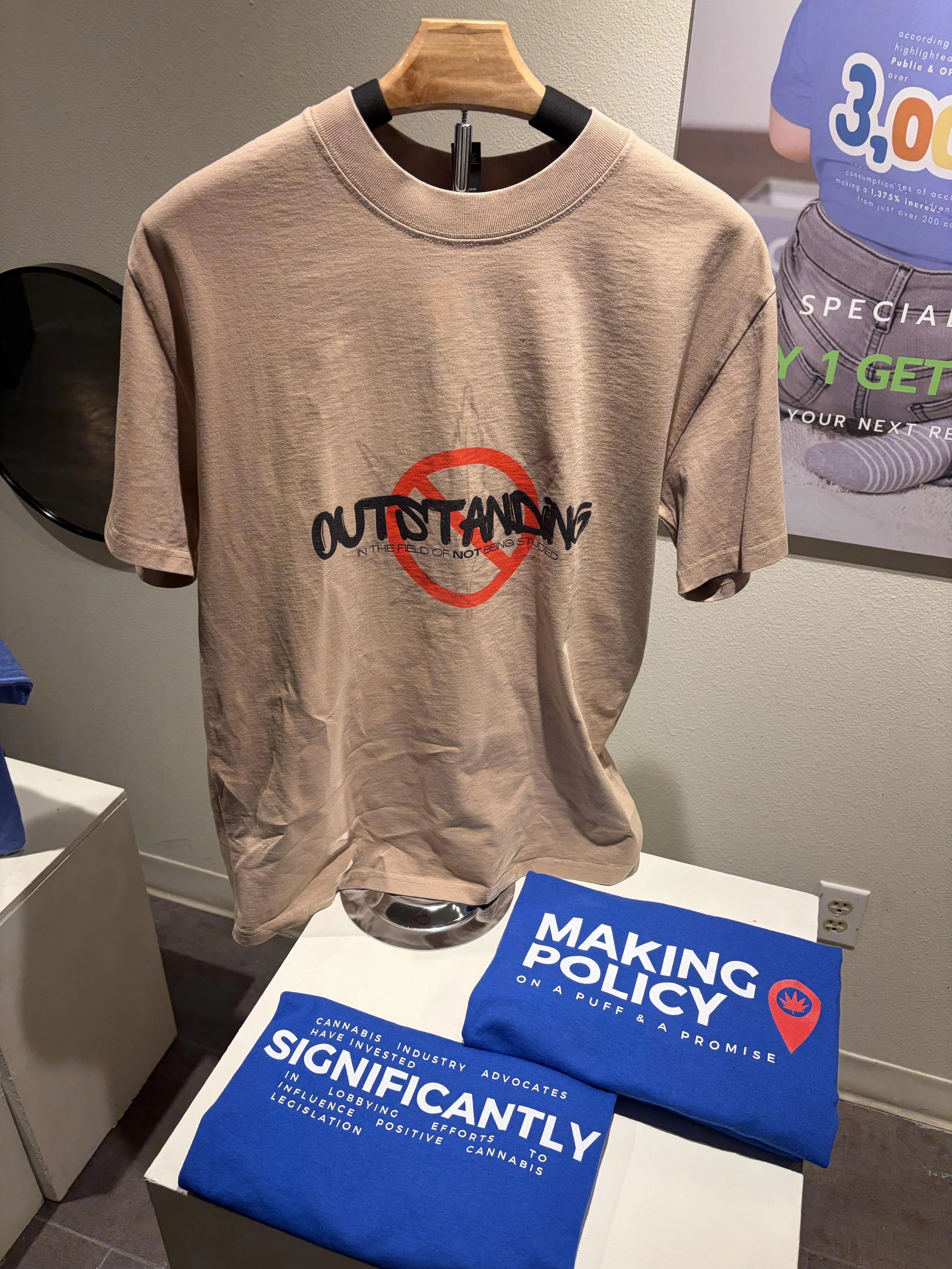
A portion of Denise Zubizarreta’s exhibit “High Expectations: The Wardrobe of Weed Wisdom” (2024), which is set up like a clothing store. The message on the brown T-shirt says “Outstanding in the field of not being studied,” alluding to the relatively limited scientific research on marijuana and its impacts.
Denise Zubizarreta’s contribution (see photo above) takes on the appearance of a faux clothing store to offer “a playful yet poignant exploration of cannabis culture.” The texts on the T-shirts and posters, she says, function “as a metaphor for our collective tendency to highlight convenient truths while obscuring the full picture. In this space, laughter and learning intertwine, urging visitors to question what narratives they wear and what truths they may be covering up.”
One of the shirts reads, “Self-taught herbology major … because parental guidance was optional.” Another shirt announces that “Dr. Google suggested a leafy green diet.”
Factual statements from CO CERP, posted among the artworks, provide useful background for the exhibit and explain why today’s marijuana is far from a harmless diversion. Here is the text of one of them:
The cannabis of today is not the same as the cannabis of 20, 10, or even 5 years ago. Concentration levels of THC in cannabis products have been increasing significantly in the 21st century. Today, THC levels in concentrates such as oil, dabs, and edibles can commonly range from 60–90% THC, with flower strains ranging between 10–30% THC. Daily cannabis users of high-concentration products have five times increased odds of developing a psychotic disorder compared with never users.
To me, the art and the artists speak for themselves so effectively that I will simply add my appreciation to the artists, the team behind Hear/Say, and the scientific researchers at the Colorado School of Public Health for this exhibit. You can learn more about the art at their website, or about the science behind the exhibit at Teaonthc.org.