How much money should the West send to the Majority World?
I’m in a quandary. Maybe you can help solve it.
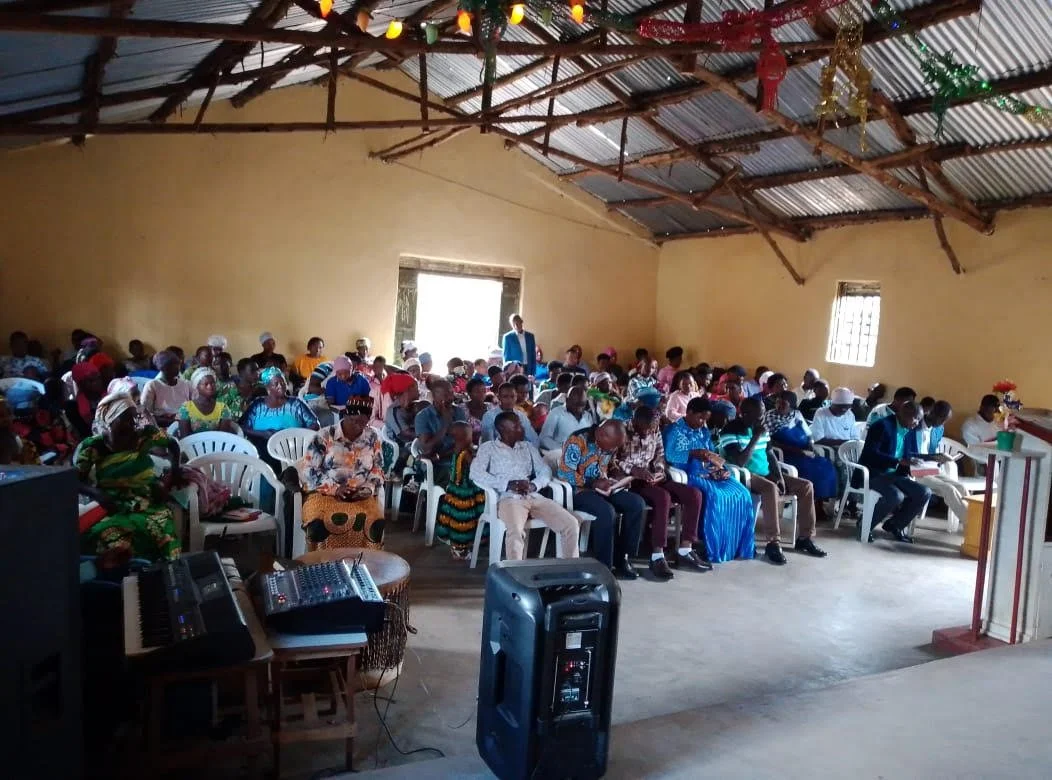
A worship service at Minevam Church in the Kyaka 2 refugee settlement of southwestern Uganda, led by pastor Gatore Herve. The church name is derived from the French words for “Evangelistic Ministry to Africa and the World.”
I try to provide useful information in this blog, but today I have no answers, only questions. Perhaps I can stimulate readers to provide good answers.
Around my trip to Burundi last fall, I became acquainted with Gatore Herve, a native Burundian who left that country due to civil strife about 10 years ago. Herve attended Bible school in Uganda and now leads a church in Kyaka 2, a refugee camp of about 140,000 people in southwestern Uganda.
Herve is an amazingly capable man, both theologically and technologically. I have shared two greetings via Zoom with his congregation, on New Year’s Day and again two weeks ago, with Herve translating into Swahili.
Our phone conversations have covered a range of practical topics, from children’s ministry to mobilizing lay outreach to whether new converts should take communion while preparing for baptism. For me, the most poignant exchange started when Herve lamented the presence of prosperity-gospel preachers at Kyaka 2.
“What do prosperity preachers say to people in a refugee camp?” I asked him.
He responded, “They say that if you’ll just sow your seed in [i.e., give money to] their ministry, you’ll get resettled to Canada.”
Herve and his congregation of about 150 have ambitious, well-conceived plans for evangelistic outreach, a kindergarten building, and an agricultural project to enhance their self-reliance. I gave him $200 to purchase a speaker system so that he could begin conducting outdoor ministry across the 26 villages of Kyaka 2.
That’s where the quandary comes in. I have lots of money; Herve does not. I could send him enough money tomorrow to buy materials for the kindergarten building and a plot of land where they would raise chickens and crops. Should I?
I feel squeezed by several competing priorities. On one hand, it is hard for me to sit on my money when I have friends who can’t carry out their ministry visions due to lack of funds. On the other hand, I want to encourage Majority World Christians to cultivate local generosity and sustainability rather than relying on outside support that may dry up.
Moreover, my money can go farther if I give to charitable organizations registered in the United States, because I can deduct those contributions from my income when completing my annual tax return. In that way, my government effectively reimburses almost one-fourth of my donations. In contrast, if I send money directly to a friend in Africa, I get no tax deduction and I have to pay a wire transfer fee besides.
My current practice is to limit my personal gifts to friends in Uganda, Malawi, Burundi, and India to a maximum of $200 per year. Meanwhile, we donate many thousands of dollars to Christian organizations working with disadvantaged populations across the world. Some of those organizations, as part of their efforts, encourage development of local self-reliance, through resources like the “Stations of Generosity” training that Herve attended in Kampala last year with Global Trust Partners.
Do you agree with that approach? How would you refine it? I would love to learn from people who have grappled with this issue and perhaps arrived at better solutions.
Note: See the April 11 post for a presentation of responses from well-informed readers.