Building a new denomination in Malawi takes grace and creativity
I’ve followed Dalitso Mpanje through an interesting set of challenges and joys
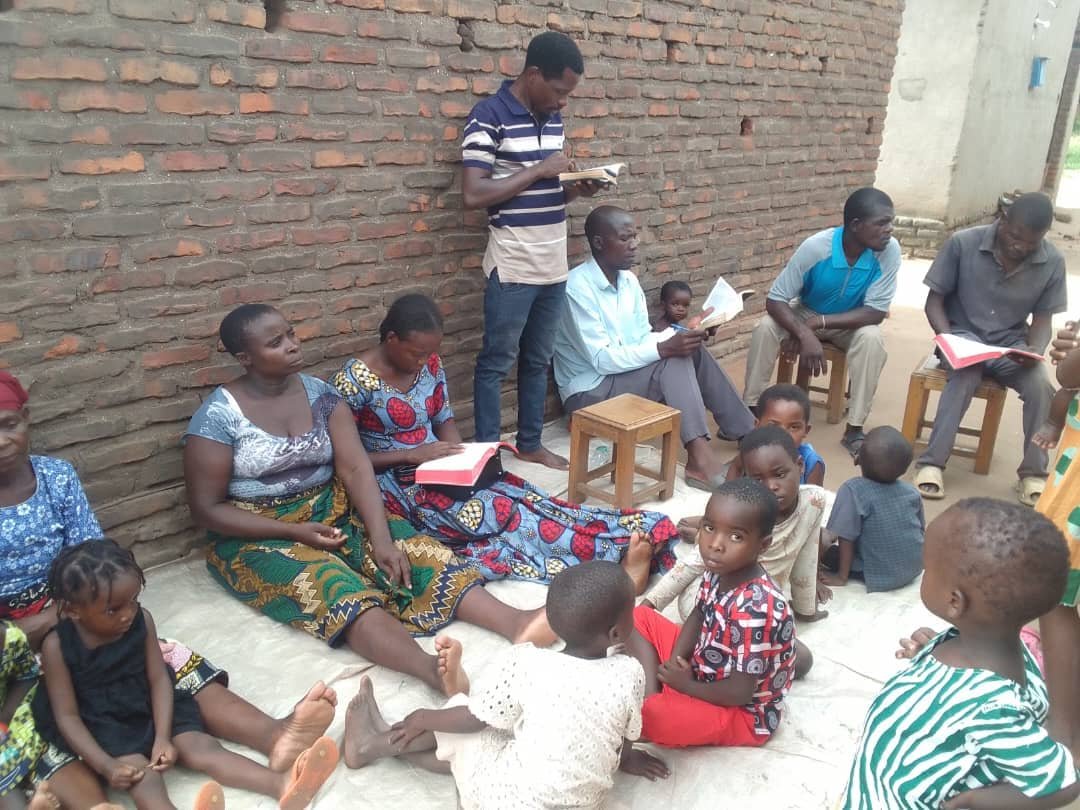
Dalitso Mpanje (standing) leads a Bible lesson for families at a congregation of the Wesleyan Nazarene Church of Malawi.
Working cross-culturally reminds me that although cultural forms differ widely around the world, many core ministry issues are similar everywhere, because human nature is essentially the same everywhere. That’s why, although we must avoid claiming expertise about a culture we don’t know well, we still have useful knowledge to offer each other.
I’ve enjoyed a fascinating glimpse of practical ministry in Africa over the last two years by engaging with Dalitso Mpanje, founder of the Wesleyan Nazarene Church of Malawi.
I became acquainted with Mpanje, who has earned diplomas in both theology and human resource management, after he subscribed to the World Evangelical Alliance’s theology journal while I was editor and then sent me a note of appreciation. I thought any young African who cared enough to thank me for my journal deserved some kindness in return!
Mpanje formerly worked in administration for the Lakeshore District of the Nazarene Church (a breakoff from Methodism that originated in the United States around 1900 and came to Malawi in 1957) before deciding to become a church planter. He started a congregation in his native town of Ntchisi, followed by additional churches in the capital city of Lilongwe and in Salima, near the shores of Lake Malawi, where he now lives.
As his reputation spread, Mpanje began receiving requests from existing churches wanting to affiliate with his network. Wanting to do things the right way, he asked a lawyer to help him write bylaws and incorporate the Wesleyan Nazarene Church. Having proper registration with the government (which many independent churches don’t have) made his nascent denomination more attractive. It has grown to 15 congregations, located in central and southern Malawi as well as in neighboring Zambia.
During a recent time when food was in short supply in Salima, Mpanje, a diligent and productive farmer, gave a 50-kilogram bag of maize to each of two fellow pastors. He thinks the gift may have aroused unintended questions as to why he couldn’t have given them two bags each. Whatever the cause of the frustration, the two men soon decided to separate and start their own congregation, renting space in the same Salima public school where Mpanje’s church met.
Mpanje restrained his surprise and wished his colleagues the best. His self-control was rewarded a few months later when the two leaders shut down their new church, asked for Mpanje’s forgiveness, and came back.
Mpanje and his board have had to exercise discipline in one case where a pastor received funds to purchase land for a church building but never bought the land. After an investigation, the pastor was removed from ministry temporarily. He has since been restored.
A congregation in Thyolo, a full day’s bus ride south from Salima, expressed interest in joining the denomination. Mpanje, constantly sensitive to avoid appearing to gain financial benefit from his work, covered half of the bus fare himself to visit the church. Mpanje told me that when he assesses an applicant church, he looks primarily for good doctrine, a full commitment to God, and a strong desire to reach the lost.
I asked Mpanje whether he noticed anything unusual during the worship service he attended in Thyolo, and he mentioned two things. First, he was surprised to see two people standing in the back of the building, facing away from the pastor during the sermon. Mpanje asked for an explanation and was told that the two were praying for the pastor. “Prayer for the service is good,” he responded, “but I think it would be better if during the sermon everyone was paying attention.”
Second, although dancing is common in African worship services, Mpanje said some of the dancing styles were a bit unusual for a worship setting. (He and the Thyolo church are still discussing whether they will join the denomination.)
Mpanje held a training weekend for all his pastors last year, but with Malawi’s gas prices among the highest in the world—$14 per gallon USD earlier this year and currently over $12—travel is difficult. Most of the support he provides comes through a WhatsApp chat group and personal phone conversations.
In our last conversation, Mpanje reported with enthusiasm that one of his congregations, in an area with a large Islamic population, has seen 10 Muslims come to Christ. The church has had good relations with its Muslim neighbors. I pray that the conversions will not lead to tension.
Mpanje accepts no salary for his work. His wife, Beatrice, gave up her cosmetics business to assist the ministry and care for their young daughter. The Nazarene Church offered to rehire Mpanje, but he graciously declined, feeling that he could not give up his calling and the churches that now rely on him in exchange for greater life stability. His dedicated lifestyle provides a reminder that even in countries with no threat of persecution, many Christians are faithfully accepting great personal sacrifice for the gospel’s sake.