Dealing with disaster in Burundi and Sri Lanka
The school where I preached seven weeks ago is no more
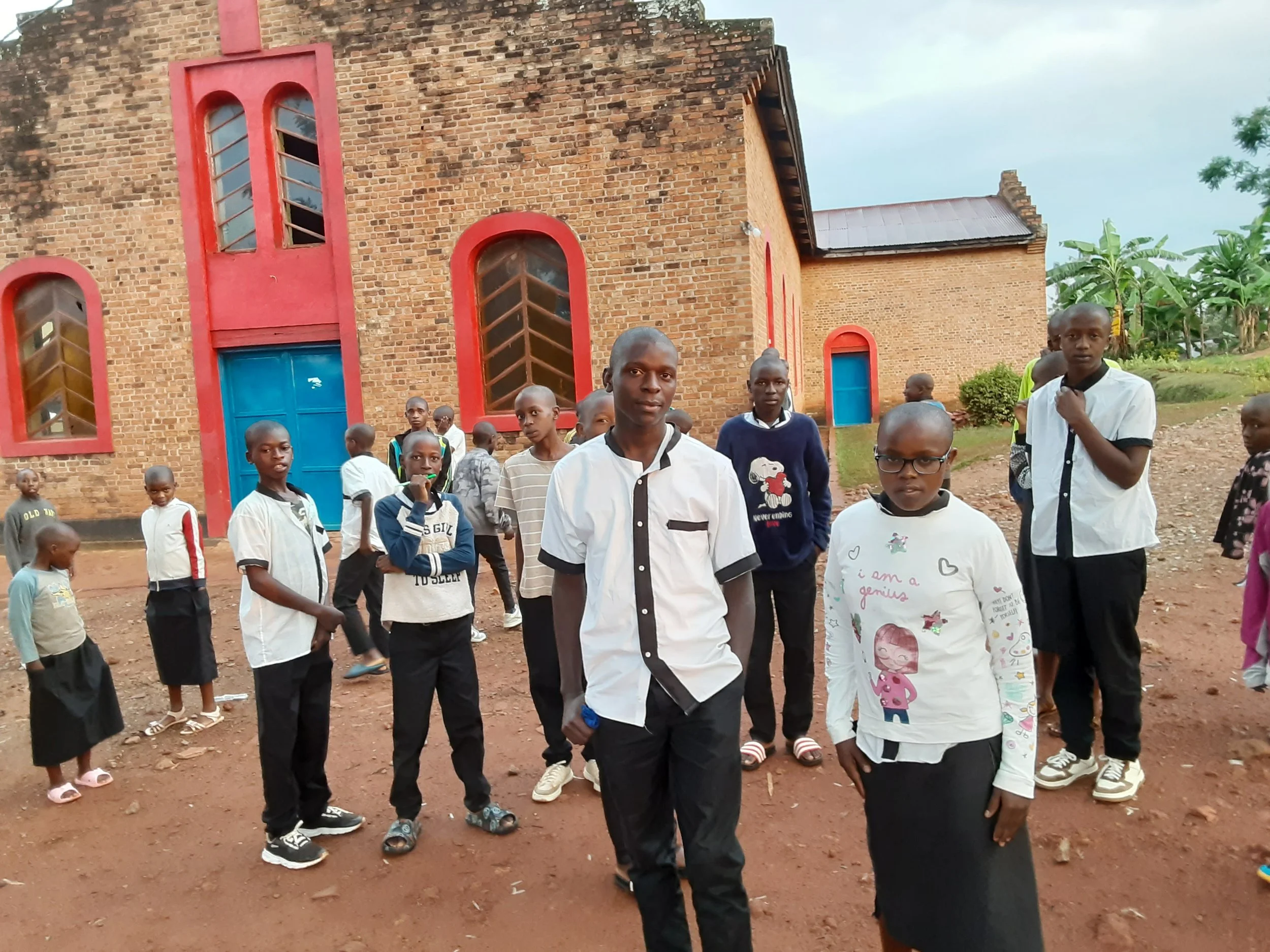
Students at the Musema boarding school in Burundi assembling before Sunday worship on October 26. I was the preacher that day. Within a month, two fires would destroy dormitory buildings and force the school’s closure.
During my 17 days in Burundi this fall, I realized that residents of that underdeveloped country accept on a daily basis conditions that would be totally unacceptable or even illegal in the United States: open ditches, outhouses for toilets, no vehicle emission controls, no traffic signals.
Of course, 300 years ago, everyone in the world lived that way. (Except that the uncontrolled vehicle emissions came from horses, camels, donkeys, and elephants instead of cars.) Life in Burundi seems difficult only because other parts of the world are more developed.
But sometimes, outdated infrastructure can be disastrous.
On October 26, I preached to hundreds of students at a Baptist boarding school in Musema, part of Burundi’s oldest Protestant mission. On November 18, a dormitory fire destroyed student belongings and forced many of the students to relocate. On November 25, another fire destroyed the dormitory to which the displaced students had moved. One student died. Aging electrical wiring is the most likely cause.
With no remaining place to spend the night, the students have all been sent home. No one knows when the school will reopen.
Finding the money to rebuild will be a challenge. If the Baptists in Burundi have any reserve funds, I saw no evidence of it. I saw two ongoing church construction projects in Bujumbura; both are likely to take years to complete, even with volunteer labor.
Raising funds from outside Burundi is hard too. The country doesn’t seem to attract much interest from Western Christians, although the Danish Baptists who founded the Musema mission in 1928 are still involved. The Church of the Open Door, which has a relationship with a Christian nonprofit in Burundi, has agreed to accept donations for rebuilding at Musema. Use this link and your gift will automatically be designated to that project.
One thing I’m confident of is that Burundi’s Baptist leaders won’t misuse whatever money they receive. They live simply and sacrificially, driven by a pure vision to see the gospel make a difference in their country.
Recovery efforts in Sri Lanka
On November 29, I heard from Adrian de Visser, the Sri Lankan pastor and church planter I featured in my May 19 post, about the impact of Cyclone Ditwah. “This may be even a greater disaster than the tsunami of 2004,” he wrote. “The tsunami’s impact was confined to the coastal areas; the floods have affected the entire nation.”
In the midst of this national crisis, Adrian thought about the disciples’ experience of being caught in a storm with Jesus. “The storm became the stage for revelation,” he wrote. “The disciples saw His power in a way they never had before. Likewise, the devastation we face may become the very stage where revival breaks forth. Though the cyclone has torn through our land, it cannot tear apart the promise of God.”
Within two days, Adrian and his team had crafted a four-part plan to deliver aid in Christ’s name. It includes immediate relief, resettlement for families whose homes have been damaged or destroyed, relocation for those living in flood-prone areas, and accompanying spiritual ministry.
Adrian does have an established US partner for charitable contributions. US donors can give to relief work in Sri Lanka through the Grace Opens Doors website, or they can mail a check to Grace Opens Doors at 3061 Carob Street, Newport Beach, CA 92660. If you donate through the website, send an e-mail to Dale Sprowl (dalesprowl@gmail.com) to indicate the designation for Sri Lanka.