Defending the value of life in a freezer
A Christian ethicist explains the troubling moral issues around in vitro fertilization
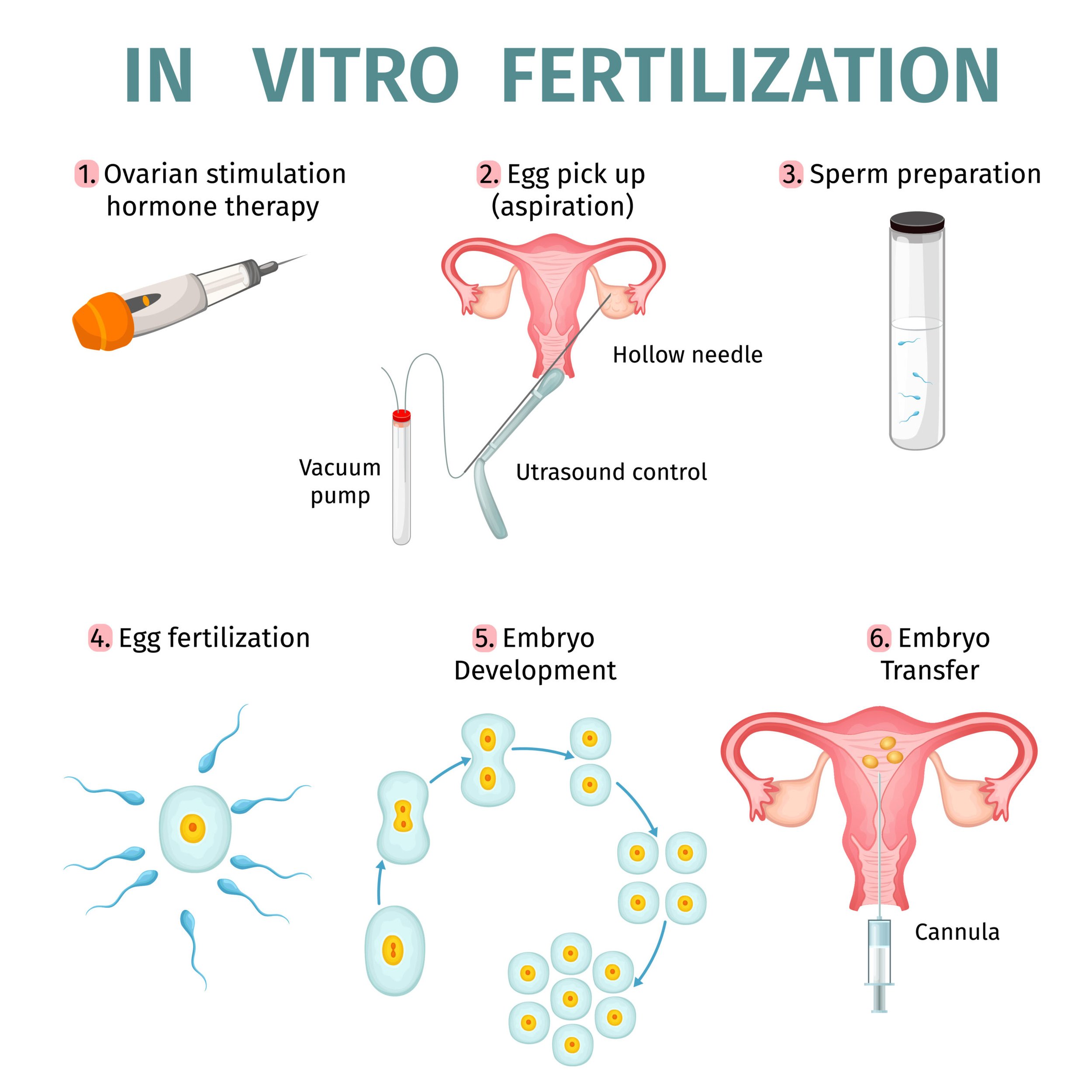
A guide to in vitro fertilization (IVF) produced by Jeevika Hospital in Bangalore, India.
The ethics of in vitro fertilization (IVF) became a major issue in the US this month as Speaker of the House Mike Johnson worked to ensure that a Defense Department funding bill would not cover broader access to IVF for members of the military.
Most IVF cycles involve the creation of extra embryos that are then discarded if not used. Many object to this practice.
IVF and other advanced fertility treatments are still relatively uncommon in Majority World nations, but their availability may increase in the near future, so Christians everywhere should be aware of these issues.
I invited Ruth Houser of Southeastern Baptist Theological Seminary, who wrote her master’s thesis on embryo adoption, to share her thoughts on the topic. You can read more of Houser’s perspective on IVF in her 2024 article in the Evangelical Review of Theology.
Christian pro-lifers should celebrate the removal of broad provisions for IVF from the Nation Defense Authorization Act (NDAA) and support even more restrictions. Though IVF aims to create babies, it is far from a child-friendly practice for many reasons. For brevity’s sake, I will focus on two of these reasons and exclude the related concerns of egg and sperm “donation” and the under-regulated fertility industry.
The first reason pro-lifers (and everyone else) should reject IVF is the massive loss of embryonic life it involves. Using data from the Society for Assisted Reproductive Technology, Live Action estimates that more embryos die in the US every year during IVF than from abortion. Only 2.3 to 7 percent of embryos created through IVF lead to live births. The rest die in the process, are intentionally killed and discarded, or are frozen indefinitely. Think about that for a moment. Millions of tiny, genetically unique humans who, given the right environment, would continue to develop into babies are snuffed out every year. They never feel the warmth of their mother’s womb, see the light of day, or display the personalities God gave them. This is not only a loss for all of humanity but a grave moral evil. These are humans made in God’s image, destroyed in the name of creating life.
The second reason we should reject IVF concerns the nature of children. Biblically, children are gifts from God for parents to welcome, treasure, and protect (Psalm 127:3–5). Parents are commissioned to teach their children about God and to disciple them to worship Him (Deut 6:7; Eph 6:4). IVF violates this view of children in several ways.
First, IVF practically treats some children as more worthy of life than others. After their creation in the lab, embryos are sorted according to the perceived likelihood that they will implant in a womb and survive. Often, they are genetically tested for disorders, gender, and (though less common) sometimes even physical characteristics, intelligence, and predicted future health. This allows parents to choose their most desirable children and to destroy the unfit and unwanted. We have no right to decide, based on these criteria, that one life is more worthy of sustaining than another.
Second, IVF confuses the purpose of children by focusing on adults. Of course, I agree that desiring to have children is good and that children bring great joy. However, the ultimate purpose of children is not to bring adults joy. Their ultimate purpose is to bring glory to God, and their parents’ role should be to guide children to love and worship Him. Part of living out this calling entails putting the well-being of children before the desires of adults, the opposite of how IVF typically functions. (For further articles on how IVF and donor conception puts adults before children, see the resources at Them Before Us.)
These statements may sound cold and uncompassionate toward those who struggle with infertility. Indeed, we should share the grief of anyone who longs to have children but remains unable to do so. However, we should not condone using government money to give people access to procedures that will end the life of more children than it will help and that distort the very nature of child and parent.
Those who oppose IVF on ethical grounds do not leave couples without hope. IVF is not the only answer to infertility. Restorative Reproductive Medicine (RRM) is a credible field of medicine that seeks to find and heal the underlying causes of infertility for both men and women instead of bypassing the body’s natural processes. Although RRM has been criticized by organizations like the American Society for Reproductive Medicine (perhaps due to competition for government funds), RRM shows similar success rates with less cost and without the ethical concerns. RRM does not promise an easy fix, but it is an ethical alternative to IVF.
Some critics have called Speaker Mike Johnson’s removal of IVF funding provisions “cowardly.” I disagree. Standing up against IVF supporters, including businesses with a financial interest in the practice (IVF is a $32.11 billion global industry), takes courage. Acting for the voiceless will likely not earn Speaker Johnson accolades, but regardless of where we fall on the political spectrum, such actions should earn the respect and support of pro-life Christians.
I asked Ruth one additional question: Given the overwhelming number of frozen embryos, the relative unpopularity of the position upheld by Mike Johnson, and the apparent lack of consciousness of embryos, would it be better to abandon this battle and focus Christian prolife advocacy on opposing abortion? Ruth responded:
The answer is no. First, retreating from the fight against IVF would discredit the whole prolife movement. The argument against abortion and IVF is the same: every human is made in God’s image, life begins at conception, and therefore we should not take the lives of unborn children. Choosing one over the other would be hypocritical and would undermine the credibility of all prolife advocacy. Second, the Bible doesn’t say we can choose our battles based on convenience or the odds of success. There is strategy involved in the prolife fight, but that should not include surrender. Our responsibility is to obey God and to trust him with the results. Embryos may or may not have consciousness, but human value is not based on consciousness but on God’s image. Similarly, the vast number of embryos in storage does pose a daunting situation that must be considered; however, their number does not undermine their individual dignity and value as humans. Their plight is another reason to keep advocating against the process that put them in this dangerous position in the first place.