How disinformation distorts the Chinese church
Fake news and conspiracy theories are a more widespread problem than I realized
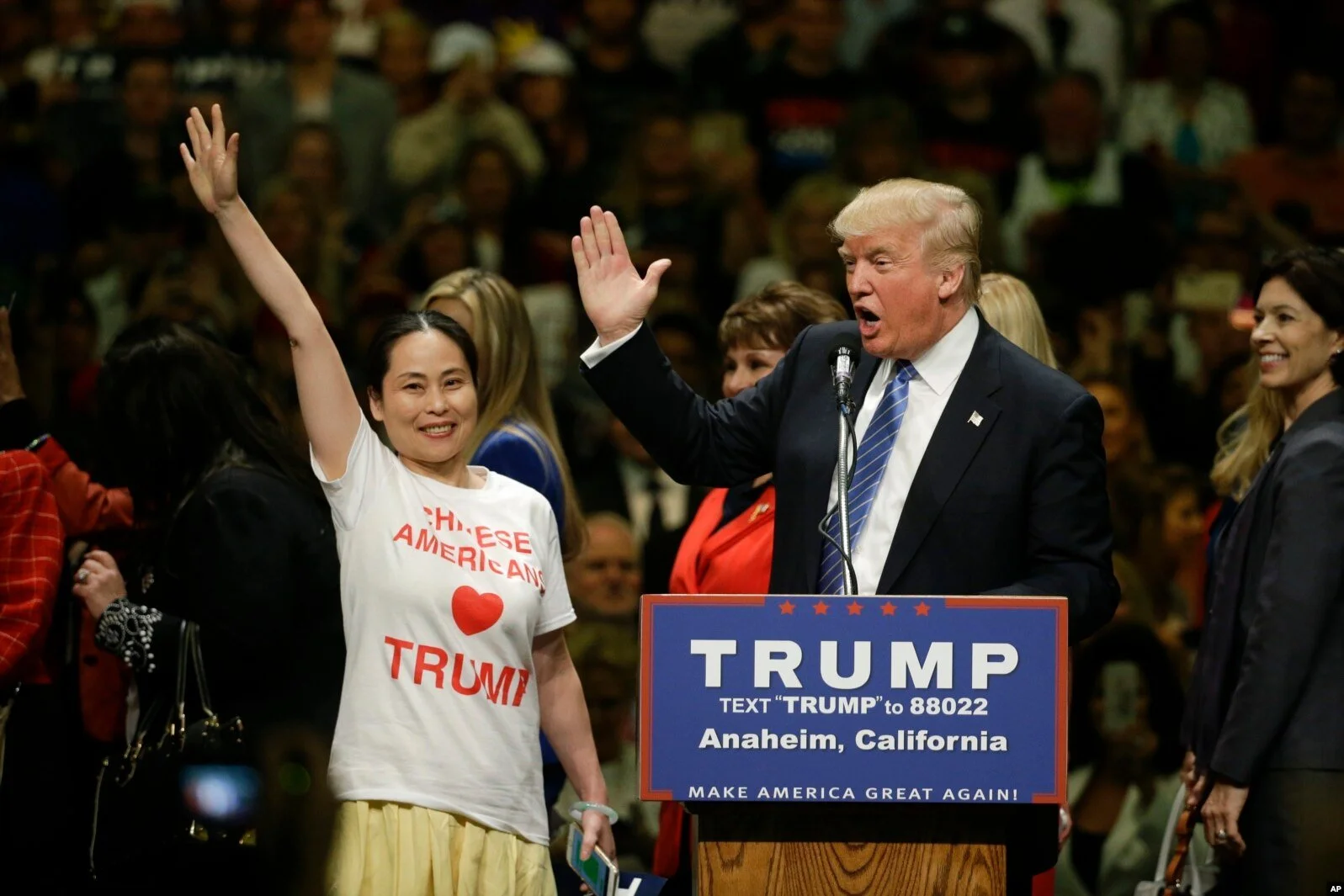
A Chinese American expresses her support for Donald Trump at a 2016 campaign rally. Interest in Trump is surprisingly strong among Chinese Christians in China as well.
One frequent underlying theme in my blog posts is the harm that results when Christians with itching ears choose to believe what comforts them rather than pursuing truth. This behavior pattern is common to adherents of conspiracy theories, the prosperity gospel, fanciful charismatic prophecies, some political agendas, and creative new theologies that deviate from historical Christian understandings.
Last week, Sam Ren published in ChinaSource—the best Christian information outlet on happenings in China—a fascinating article on the effects of disinformation on Chinese house churches. I encourage you to read the full 2,000-word essay. I know Ren personally and have appreciated the quality of his insightful, balanced scholarship on the Chinese religious context.
In his article, Ren begins by explaining that the Chinese Christian community suffers from a near-total vacuum of objective domestic reporting on religion. As a result, they look outside China for news and guidance.
As Ren writes, “As a researcher within this field, I find it a biting irony that my primary data regarding major events within the Chinese Church often comes from the New York Times, the Washington Post, or Christianity Today.”
Ren believes this unusual situation, in which Chinese Christians learn about their own spiritual community mainly from Western sources, has caused them to become “Americanized.” What he means is that instead of adopting their own theology or social strategy suitable for living as Christians in China, they adopt Western perspectives that don’t fit their own culture.
This tendency is especially strong in the Chinese house church movement. It dates back to the fundamentalist ethos imported by earlier Western missionaries and to resistance to the Three-Self Patriotic Movement, China’s government-approved church. It was further strengthened during China’s “Reform and Opening Up” period beginning in 1978, as a framework shaped by anti-communism, a strong emphasis on religious freedom, and the ideology of the U.S. Christian Right began to influence Christian discourse in China.
Ren sees the ripples of this framework in the surprising strong support for Donald Trump among Chinese Christians. Obviously, they are not openly campaigning for him, but their tendency to view the world in a sharply dualistic manner, as a battleground between faithful believers and their evil persecutors, leads them to think of Trump as their protector.
“Because many Chinese Christians view American conservative outlets as the ‘voice of the faithful,’” Ren writes, “they often lack the critical distance to distinguish legitimate conservative thought from fringe conspiracy theories. And because these narratives traveled through trusted Christian networks, they were not always received as political propaganda, but as information from ‘our side.’ In this way, ‘faith’ became conflated with loyalty to specific Western political narratives.”
The consequence of this distortion, Ren argues, is the weakening of the Chinese church, because many believers, influenced by a narrative that depicts them as victims of persecution, come to see the West as their “safe theological and political refuge” and seek to emigrate.
As Ren explains, “We see university professors abandoning tenured positions to seek asylum; we see entire congregations attempting to relocate to Southeast Asia or the West. These bitter stories of migration are often fueled by a fundamentalist style of eschatology that views the world as a sinking ship. Without indigenous media or theological reflection offering a balanced view of how to live faithfully under pressure, many see flight as the only holy option.” In an unfortunate irony, Western Christians who want to strengthen and encourage the Chinese church are actually undermining it.
Ren suggests two main remedies. First, just as earlier generations of missionaries had to distinguish the core gospel from their own cultural trappings, Christians outside China should avoid exporting political or other ideologies as if they were identical to the gospel. Second, Chinese Christians must develop “informational sovereignty,” relying on indigenous sources to help them interpret and navigate their own cultural situation without overly depending on either official state media or political ideologies from afar.
Usually, we think of colonization as one culture imposing its ways on another. But Chinese Christians are voluntarily (though partly due to the lack of domestic sources) looking to Western sources to interpret their complex, sensitive domestic situation for them. That doesn’t work well, especially when those outside sources, sitting in safe locations far away from China, are encouraging Christians within the country to take an aggressive posture toward the Chinese regime.