Life lessons from political campaigns
Campaigns are usually ugly, but they say interesting things about human nature
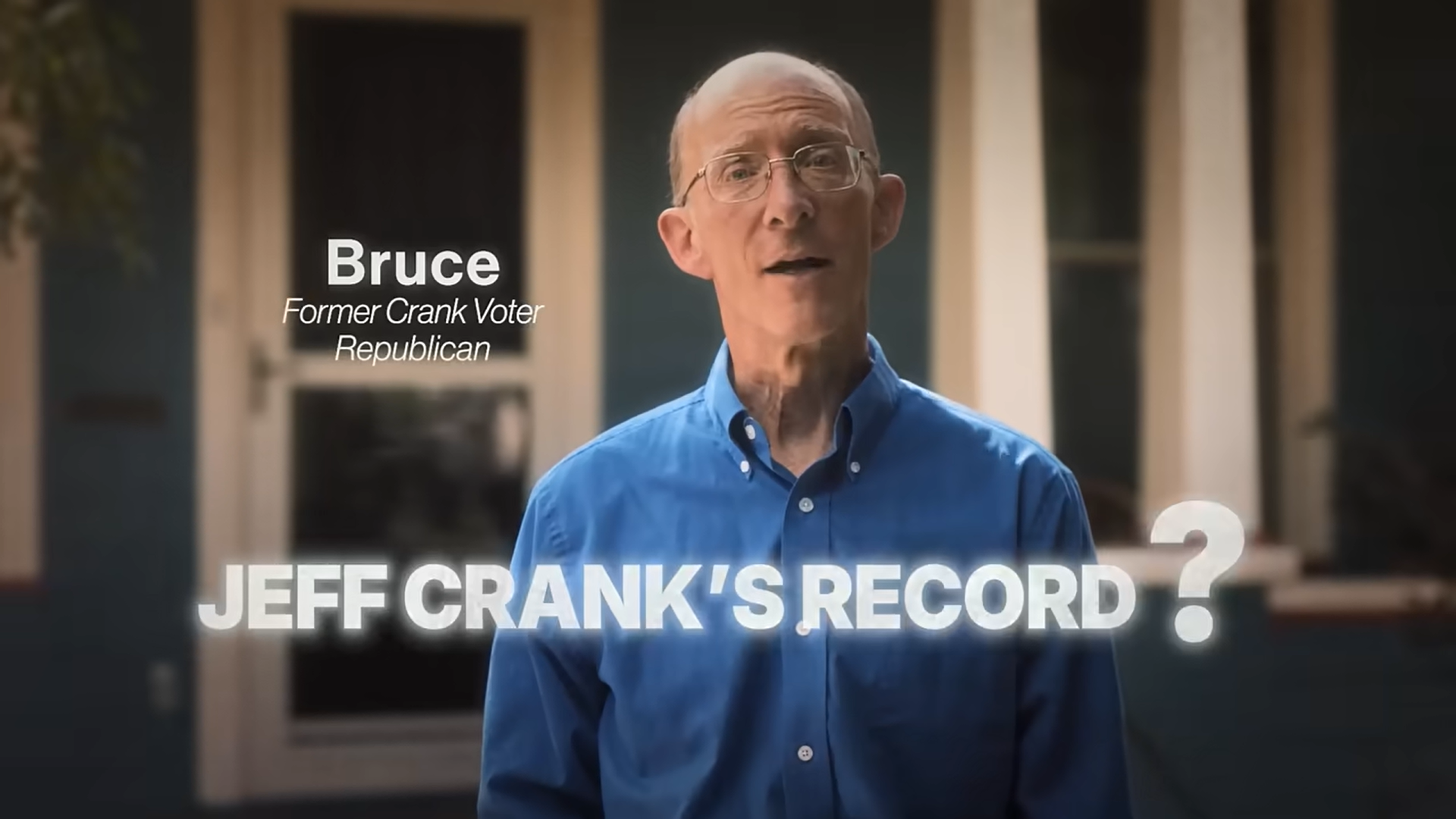
A screenshot from a campaign ad released this week in my congressional district. Yes, that’s really me.
Tomorrow, the US federal elections of 2026 will be one month away. Both within the US and around the world, many people are hoping that the elections will restrain Donald Trump from continuing to take a wrecking ball to the US government and the world order.
Every two years, Americans choose among candidates for all 435 seats in the US House of Representatives and (since senators have six-year terms) one-third of the 100 seats in the US Senate. Because we have only two major parties, and because members of the Republican party has consistently supported Donald Trump, the people who don’t like Trump are trying to elect more Democrats.
Since most parts of the country are either conservative (which means they tend to vote Republican) or liberal, most of the seats in the House and many in the Senate go to the same party virtually every time. Currently, the Cook Political Report classifies 361 of the 435 House seats as solidly Republican or solidly Democratic. The other 74 races have attracted hundreds of millions of dollars of campaign spending.
I have been involved in one of those races since mid-February, back when the Strait of Hormuz was open. Today I will talk about what a campaign for US Congress is like and try to draw some useful lessons.
(Since I have a global readership, I should acknowledge that campaign styles differ widely around the world. When I edited a book on Indonesian politics, I learned that posters are a ubiquitous form of campaign advertising there. In El Salvador, I saw telephone poles painted in political party colors. In Burundi, I saw parklets marked with the ruling party’s name. The means of communication vary, but the principles of how to win voter trust apply cross-culturally.)
Each US House district has about 700,000 people. That number includes children who can’t vote, but there might be 400,000 votes cast in an election. Reaching 400,000 people is a big task. If a candidate already has high, positive name recognition, due to being a famous athlete, entertainer, businessperson, or public official at a local level, that can be a big help.
My candidate, Jessica Killin, is not a famous person, so she had to start early. She announced her campaign in mid-2025, 16 months before the election. By January 2026, she was holding events in people’s homes and local coffee shops, often with just 10 or 20 people attending. Reaching a whole congressional district by talking to 10 or 20 people at a time may sound crazy, but personal contact with small groups of people builds trust. Make a good impression on 10 people and they start telling their friends. Some of them agree to put a sign advertising the candidate in their front yard, which increases name recognition and contributes to a sense of growing popular support.
Even better, some may volunteer to help spread the word by canvassing—that is, going door to door to tell others about the candidate. Killin’s campaign has sent people to nearly 50,000 doors in the district, providing information about her and answering questions. Modern technology makes the canvassing process more efficient by helping campaigns identify people who vote regularly and are open to persuasion.
Television advertising typically begins in September. Candidates usually start with one or two ads to introduce themselves, but then they start attacking each other. Nobody likes negative advertising, but everybody does it. Each candidate does research to uncover the least popular things about the competitor’s record and then tell the world about it. In my district, the candidates have accused each other of ethical lapses and of being a political “insider” interested in their own personal benefit.
I draw two lessons from the usual pattern of negative campaigning. First, anybody who runs for political office basically started running the day they were born, because anything they’ve done throughout their past life may be used against them. (However, voters appreciate honesty and will often forgive candidates’ past mistakes if they acknowledge their errors and show that they have changed.)
Second, when people have already formed a positive view of a candidate, negative advertising rarely works, because it is dismissed as inconsistent with what they already believe.
Campaigns usually include public debates where the candidates discuss their views on various policy issues. But elections are not decided simply on issues. In my door-to-door visits, fewer than one of every 10 voters asks a question about any issue. Many people base their voting decisions on such factors as age, gender, military service, community involvement, or their sense of the candidate’s moral character, compassion, or willingness to listen.
Unfortunately, many Americans seem inclined to vote for whoever will give them the most benefits. The time when a US president could inspire admiration by saying, “Ask not what your country can do for you—ask what you can do for your country,” as John F. Kennedy did in his 1961 inaugural address, has passed. Today, campaigns are more likely to be battles between Republicans promising tax cuts and Democrats offering more public services.
Despite all the influence that rich donors and political parties wield, campaigns are usually won by candidates who work hard, earn trust and respect, demonstrate that they care about others, and inspire people to work for them.
Now let’s draw parallels to Christian work. Like good campaigning, life-changing ministry is usually carried out by people who work tirelessly and selflessly (2 Corinthians 6:4–7; 1 Thessalonians 2:9), earn the trust and respect of others (1 Thessalonians 4:11–12; Luke 16:10), have compassion for their neighbor, and inspire others to work with them. In both politics and Christian ministry, it is more fruitful to hire people who love God and neighbor deeply and teach them their job duties than to hire people who know the technical aspects of their job and try to teach them to love people.