Nepal: The future is murky but hopeful
A fast-growing church adjusts to rapid social change
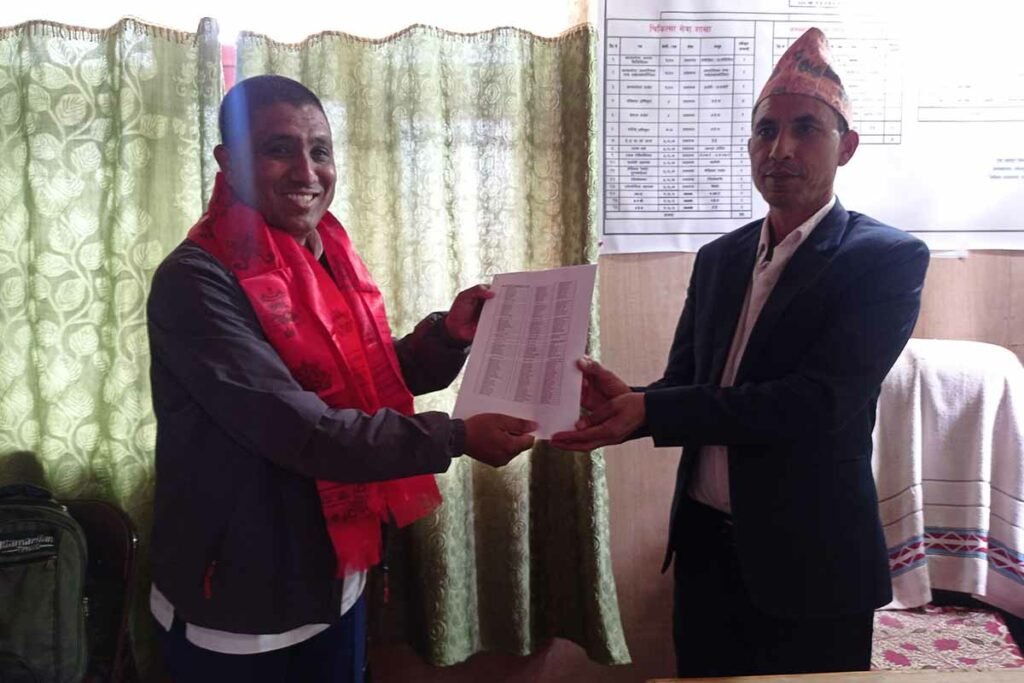
Prakash Karki (left), founder of the Nepal Grand Christian Trust, received this warm greeting from a government official when he delivered essential healthcare equipment to a remote, government-run hospital.
Many sources have claimed that in recent years, the country with the fastest-growing Christian community has been Iran. That claim is hard to verify. But before Iran, the title of fastest-growing church was widely granted to Nepal, a formerly Hindu kingdom where efforts to solidify religious freedom have collided with Hindu nationalism.
After riots in September 2025, driven largely by the younger generation, a new era has arrived in Nepal, with a new regime and new uncertainties. Indian Christian journalist Surinder Kaur probed the situation in detail last month in this excellent article.
Among the Nepali Christian voices quoted in Kaur’s article were Surendra Bajracharya, another excellent writer who has appeared on my blog previously, and his colleague Prakash Karki, who has advocated tirelessly and successfully for the establishment of “Christian trusts.” Prior to Karki’s advocacy, Christian organizations could not own property.
Karki has now also registered the Nepal Christian Grand Trust as an entity under which individual churches and Christian organizations can register, rather than requiring each one to file its own paperwork.
I asked Bajracharya for an update on the situation in Nepal.
How is the Christian trust system working?
More than 36 churches, along with thousands of branch congregations and related organizations, now have official legal recognition through Trust registration. This means they can operate openly, own property, and serve communities more effectively. In several places, land that was disputed or held under personal names has finally been transferred to churches, securing their presence for the future.
For years, Christians also struggled to secure burial grounds. That issue has now been addressed with the creation of the “Nepal Graveyard Trust,” giving believers the ability to manage burial sites legally and with dignity. Many churches are still in the process of registering, which has raised concerns among some government officials. While this visibility has caused unease in certain circles, it has brought great joy to Christians, who see it as an answer to prayer. It also opens the door for greater transparency in areas like taxation, financial reporting, and compliance with national laws.
What has happened for the Christian community in Nepal since the riots and the change of government?
There haven’t been major visible changes for Christians yet. But the Karki Commission Report [no relation to Prakash Karki’s work], submitted in March 2026, has stirred things up somewhat. The report recommends tighter government oversight of religious institutions, including churches, monasteries, and madrasas. It calls for closer monitoring of funding and activities, especially where they might be seen as security risks. This means churches could face more scrutiny in how they operate, receive support, and carry out ministry.
How will the establishment of the Christian Grand Trust improve the situation?
The Nepal Christian Grand Trust was formed to give Christians a unified voice, strengthen cooperation with government and public institutions, and participate in policy discussions. Established under the National Civil Code 2074 (adopted in 2017), it works to protect church property, promote unity, and represent Christians nationally and internationally. Its vision is to build a safe, respected community while upholding religious freedom, justice, and equal rights. The Trust also advocates for securing rights guaranteed by law, and it asks for prayer support from Christians worldwide.
The Grand Trust has only recently been registered, and formal engagement with the government hasn’t begun yet. The Trustees are carefully considering the best way forward for the welfare of the Christian community. They welcome thoughtful suggestions from both Nepali and international partners.
Is the church in Nepal continuing to grow?
Yes, despite some legal restrictions and social opposition. Since the 2017 anti-conversion law, growth has become more cautious, but it remains strong—mostly through personal relationships, small fellowships, and grassroots ministry rather than large public gatherings.
Churches are now present in all 77 districts, including remote mountain areas. Growth is especially strong among marginalized groups such as Dalits, rural poor, and urban slum communities. Much of this expansion comes through prayer for the sick, literacy programs, and practical social support where government services are lacking. Thousands of house fellowships have been formed, helping the church mature with a stronger focus on discipleship and leadership development.
What does the Nepali church need most in order to continue flourishing?
The Nepali church thrives when it invests in strong local leadership, intentional discipleship, and community-rooted ministry. As one Nepali pastor put it, “The number of souls is increasing—which is good—but leaders are not growing at the same pace. Therefore, we must focus on leadership first.”
Churches that combine spiritual teaching with compassionate healthcare, education, and care for the marginalized embody a livable gospel that naturally draws people in.
Have you and your Nepali colleagues learned any lessons that you would encourage Christians to apply in other countries where they are a minority group?
The church’s rapid growth has been most visible among marginalized groups, like Dalits, rural poor, and ethnic minorities. This reflects Jesus’ words that the gospel would be preached to the poor.
Another factor in our growth has been the reliance on small groups and house fellowships, which provide flexibility and resilience under pressure. The Nepali church has shown remarkable perseverance, continuing to grow in depth despite persecution and legal restrictions.
Is there anything else you would like the world to know?
A few years ago, we never envisioned that we would be part of securing legal recognition for churches in Nepal or helping them understand and access their rights and privileges amid increasing restrictions. Yet the Lord used Prakash in an extraordinary way, even through his four years of imprisonment on false charges (as I described in this 2024 Christianity Today article).
After his release, Prakash came to a deeper understanding of the pressures facing churches and developed a strong burden to explore legal pathways for their protection and recognition, which led to his ultimately successful four years of consistent effort. Today, what once seemed impossible has become a part of our history, an encouragement to many, and a testimony to the greatness of God who initiated and carried this journey forward.