Spiritual formation must precede social action
A contemplative recommendation for the beginning of Lent
“Then Simon Peter, who had a sword, drew it and struck the high priest’s servant, cutting off his right ear.” —John 18:10
David French, an evangelical opinion writer for the New York Times who is very agonized about current US political events, recently said, “You should be doing, now, something that your descendants will be able to look back and point to and say, ‘This is what my grandmother or grandmother did in an important moment.’ … What is it in your life, in your context, that you can do that your grandchildren will look back and say, ‘This is what Grandpa did in 2026 and I’m proud’?”
I agree with French’s sentiment. But I have one concern. If Christians simply act out of a felt need to “do something,” their resulting actions could be unhelpful or even counterproductive, like Simon Peter’s pointless, rash aggression against a servant.
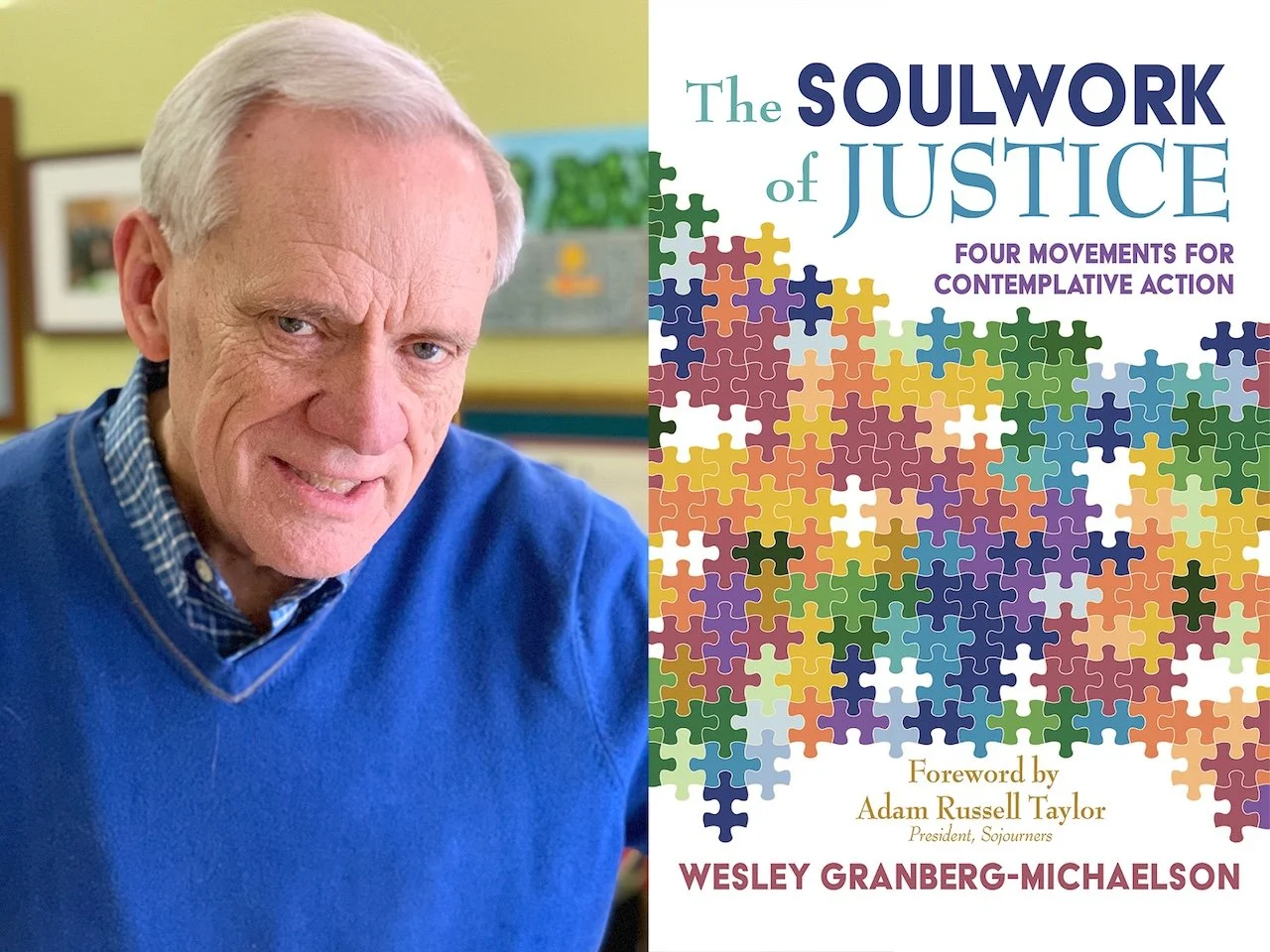
To show God’s love to their neighbors, especially in distressing times, Christians must act. But solid spiritual formation must precede and guide their social action. This is the central theme of Wes Granberg-Michaelson’s book The Soulwork of Justice.
Granberg-Michaelson has a long history of Christian leadership, including 17 years as general secretary of the Reformed Church in America. But before that, he spent eight years on Capitol Hill as aide to US Senator Mark Hatfield, a moderate Republican who was one of the most spiritually mature Christian voices in US politics.
Surrounded by the busyness and self-importance of Washington, DC, the young Granberg-Michaelson discovered the importance of spiritual disciplines: prayer, introspection, journaling, quiet retreats, and having a spiritual director. Initially, he resented the requirement to adopt spiritual disciplines in order to participate in a missions group at his church. “It sounded legalistic, robbing me of my freedom in Christ,” he writes. “And my time was already so pressured, with an unjust war to stop, after all.” (Hatfield was a prominent opponent of US involvement in the Vietnam War and Granberg-Michaelson was his foreign policy advisor.)
But Granberg-Michaelson came to recognize that just as a musician must practice in order to perform well, a Christian needs to do contemplative practice to be spiritually consequential. “If your calling,” he asks, “is to participate in God’s transforming work in the world, confronting the perils of embedded evil and pernicious, grinding injustice, how can you possibly attend to those tasks without the disciplined preparation of your heart and soul?”
If you are not familiar with Christian contemplative traditions—well, you should be. Granberg-Michaelson provides an accessible (I was going to say comfortable, but spiritual disciplines are not supposed to be comfortable) introduction to contemplative work, from a person who, when he started out, was as uncomfortable signing up for a silent retreat as most of us would be.
Granberg-Michaelson discusses four pathways he describes as central to spiritual transformation: from self-sufficiency to belonging, from certainty to connection, from grandiosity to authenticity, and from control to trust. Each description is amply and vulnerably illustrated with passages from the author’s own diaries.
The closing chapter highlights eight roots or core convictions that should characterize our social engagement if our contemplative interaction with God has been effective. Here I will mention just two: a steadfast, indefatigable, long-term commitment (because important social changes usually take a long time) and maintaining an open heart toward rather than demonizing our opponents.
A handful of passages and examples reflect Granberg-Michaelson’s left-of-center policy leanings. If your vision of a good society and positive social change differs somewhat from his, find your own examples. Don’t let differences in practical application get in the way of God’s call to contemplation. As we enter the liturgical season of Lent, this would be a good time to start.
My answer to “do something”
In this treacherous moment for the US, I have felt called to do more than write blog posts and, with careful reflection, am investigating a possible new undertaking.
Although much of my work in public policy has been nonpartisan, my involvement in political campaigns, from 1990 to 2018, has always supported Republicans.
I now live in a city that has elected Republicans to the US House of Representatives for 54 consecutive years. But shifting demographics and the current political climate have created an opportunity for change, and the Democrats have a politically experienced, well-funded, highly determined candidate. Nancy and I attended one of her events last week. I told the campaign manager, “The last time I attended a Democratic candidate’s event, it was eight years ago and I was spying for the Republican.”
Assisting a Democrat’s campaign for Congress would be a new experience for me, but I feel that I haven’t changed—the Republican party did.